Check out our new whiteboard tables! Such a cool tool for group work. Special thanks to our School Board for investing in our school and our tamariki!


Check out our new whiteboard tables! Such a cool tool for group work. Special thanks to our School Board for investing in our school and our tamariki!
We love buddy reading. Our job as a buddy reader is to support each other when figuring out unknown words as well as discussing the text with each other.
This week we have been reading articles from our local paper, in particular the articles about local art. Our reading focus for the past two weeks has been critical literacy. This has involved listening to song lyrics, reading articles and then deciding if the material or artists have influenced New Zealand culture in any way? Have any social issues been identified? Do any of the songs or articles resonate with me, if so why?


Kia ora whānau,
Today in Room 1, we had an awesome kōrero and ICF session with Maria Krausse about being “CyberSmart” learners. Our focus was on understanding the importance of being in the right place at the right time when using digital technology to empower our learning.
In this digital age, our tamariki are constantly surrounded by technology. Being a Manaiakalani School, digital tools are the driving force behind accelerating progress in numeracy and literacy. From Chromebooks to tablets, digital tools have become a significant part of our classroom environment. But with great power comes great responsibility, and that’s where being CyberSmart comes in!
What does it mean to be CyberSmart?
Being CyberSmart means making smart choices when we’re online. It’s about knowing how to use digital tools responsibly and safely. Today, we focused on three key points:
Our Class Discussion:
We started with a discussion on what it means to be in the “right place” online. The tamariki shared their thoughts and experiences, and we talked about how certain websites can be distracting or even harmful. We then moved on to the “right time” and discussed scenarios where using technology is beneficial and times when it might be better to focus on other activities.
To bring it all together, we explored how being CyberSmart can empower our learning. We looked at examples of educational websites and tools that can help us dive deeper into our subjects, and how staying focused on these resources can make our learning more effective and enjoyable. We made our own posters in google draw and posted them on our individual blogs.
Our CyberSmart Tips:
Here are some tips from Room 1 to help us all be CyberSmart learners:
By being CyberSmart, we can make the most out of our digital tools and create a safe, productive learning environment. Let’s continue to make smart choices and empower our learning every day!


In class facilitation with Manaiakalani – Slides skills and recording.
We are learning to use shapes, texts and images effectively in google slides and recording in slides.


Rainy days mean inside during break times. Rainy days call for board games and card games.


This week, we begin celebrating the unique strengths within our classroom, and we’re thrilled to shine a spotlight on Grace. Grace has shown incredible talent and dedication in te reo Māori and tikanga Māori. Her passion for our culture and language is inspiring, and she consistently shares her knowledge with her classmates, enriching our learning environment. Ka pai, Grace! Your commitment to preserving and promoting Māori heritage is a taonga to us all. Keep up the amazing mahi!
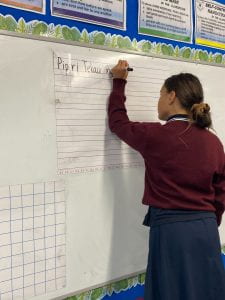


We have moved on to multiplication and division for numeracy. This means we have a new warm up activity: the Timed Multiplication Grid! This activity is designed to sharpen multiplication skills and enhance mathematical fluency. Students race against the clock to complete a grid of multiplication problems, encouraging speed and accuracy. After each session, their performance is plotted on a graph, providing a visual representation of their accuracy over time. This dynamic warm-up not only makes practicing multiplication fun and engaging but also helps track progress and identify areas for improvement. Perfect for daily use, it’s a fantastic way to start each math lesson on the right foot!
We also have some new multiplication and division games that utilise UNO cards. These have been a welcome addition to our maths activities.
Some groups have been working on ‘multiplication in parts’. Using place value knowledge to pull the number apart, multiply known facts and then putting the answers of these facts back together.
Talofa lava! This week we embraced and honored the rich culture, traditions, and language of Samoa. This week, our class came together to acknowledge the beauty and significance of the Samoan language and to incorporate its vibrant cultural elements into our learning environment. We are especially excited to have our resident expert, Enosa, guiding us throughout the week.
Samoan Language Week, known as “Vaiaso o le Gagana Sāmoa,” is more than just a celebration—it’s an opportunity to deepen our understanding and appreciation of the Samoan heritage. Language is a vital part of any culture, and by learning Samoan, we not only enhance our linguistic skills but also build bridges of understanding and respect between different cultural backgrounds.
One of the highlights of this week is the innovative integration of Samoan design into our maths curriculum. Samoan art is renowned for its intricate patterns and symbolic motifs, often found in traditional tattoos (tatau), barkcloth (siapo), and other crafts. By incorporating these designs into our maths lessons, we can create a visually engaging and culturally enriching learning experience.
Here are some ways we’re blending Samoan design with maths:
We are thrilled to have Enosa, our resident expert, leading us through the intricacies of the Samoan language. Enosa’s passion for his culture and language is infectious, and he brings a wealth of knowledge to our classroom.

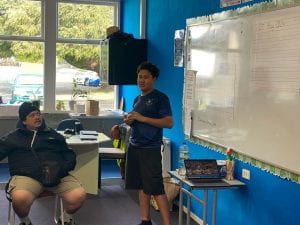


This week we welcomed Matua Bernard to the Rutherford Junior High School staff whānau and Taoho to the Rutherford Junior High School ākonga whānau.


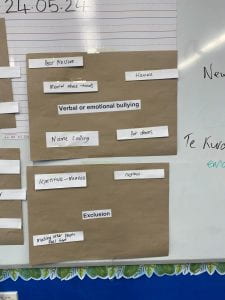
Continuing our work against bullying, we enjoyed two sessions with Constable Ben as part of the Kia Kaha program. Throughout the sessions we discussed bullying from the victims perspective and the bully’s perspective. We talked about ways in which we could begin to stamp out bullying. The role plays were a very entertaining way to discuss the topic.